Prototyping and outcome.
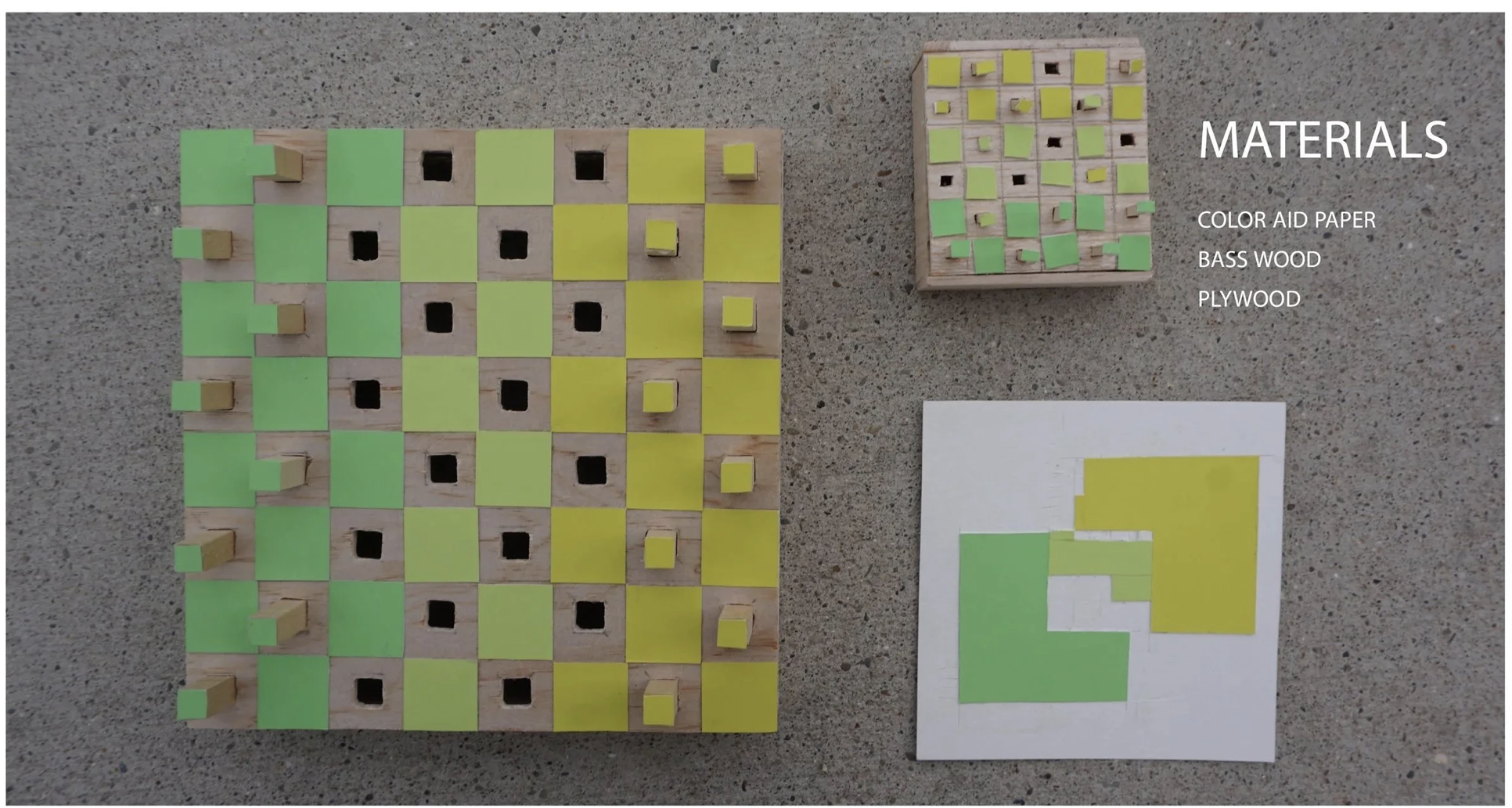
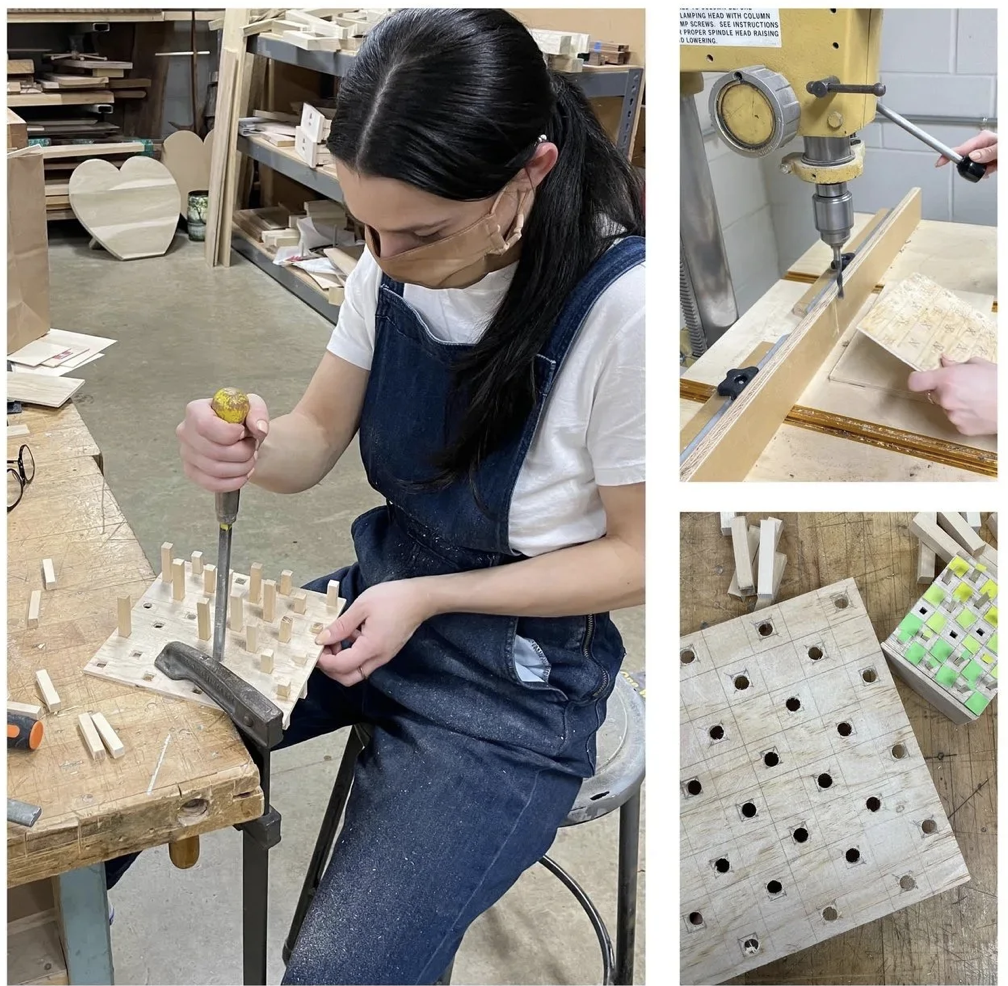
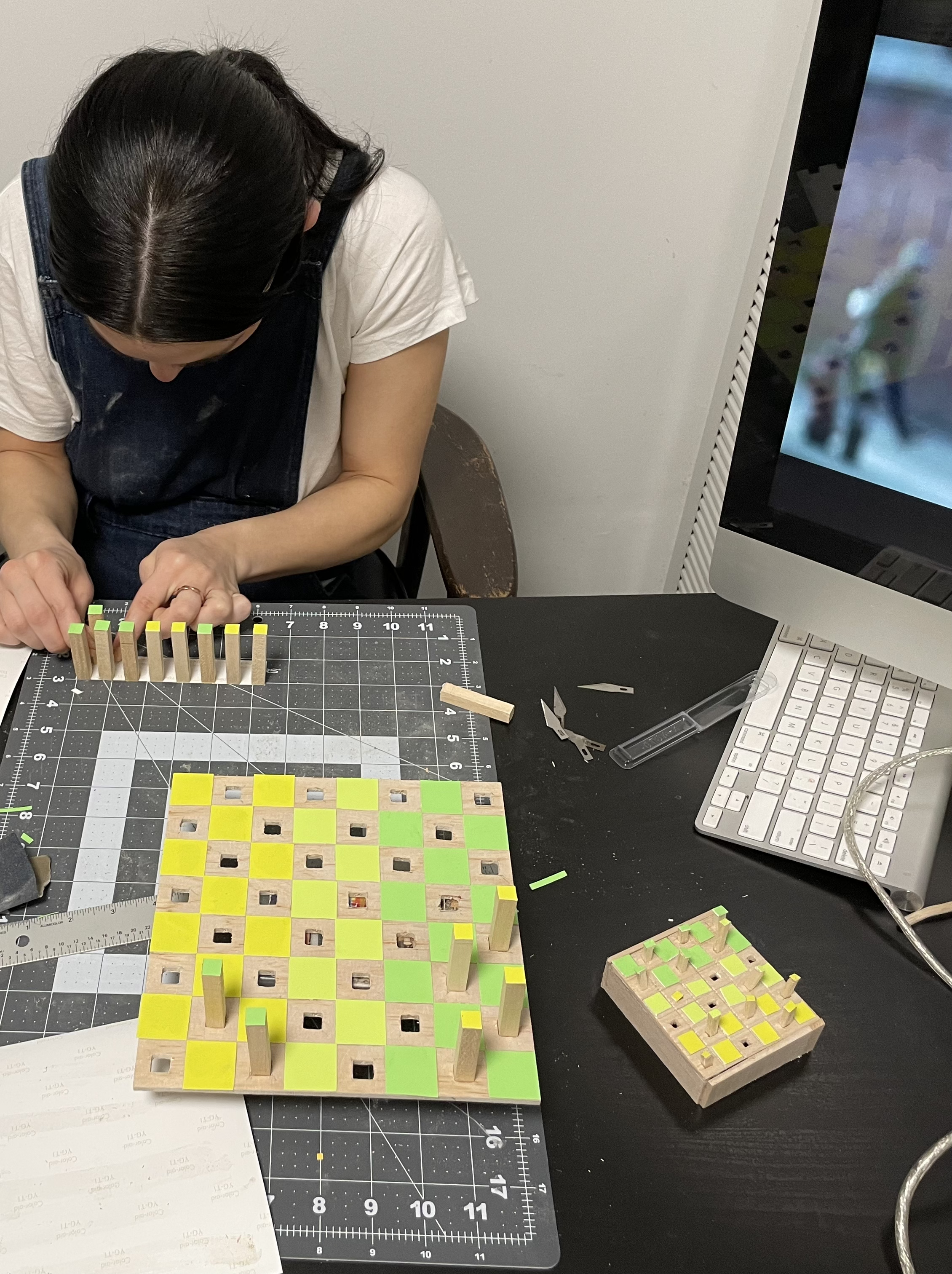
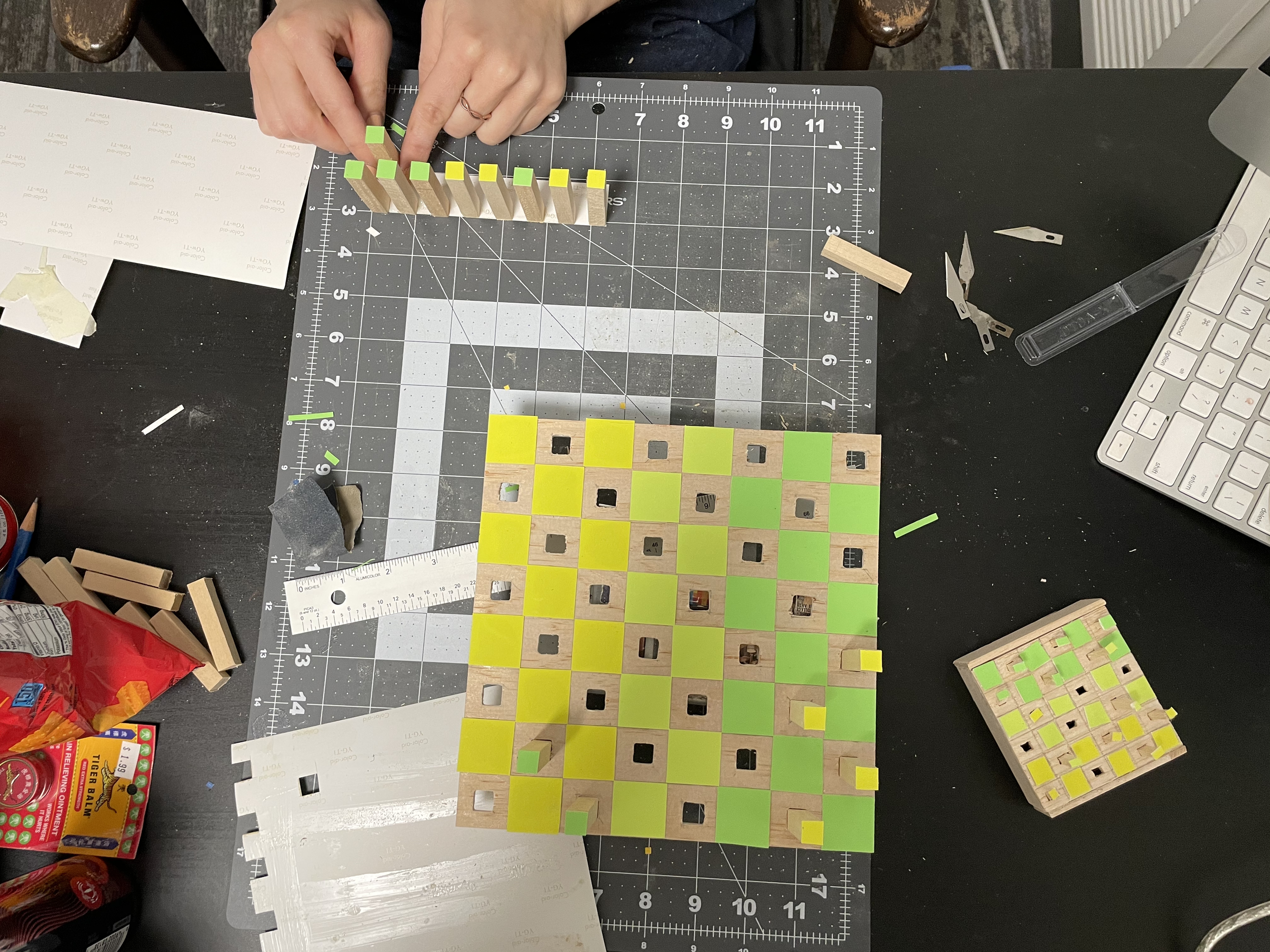
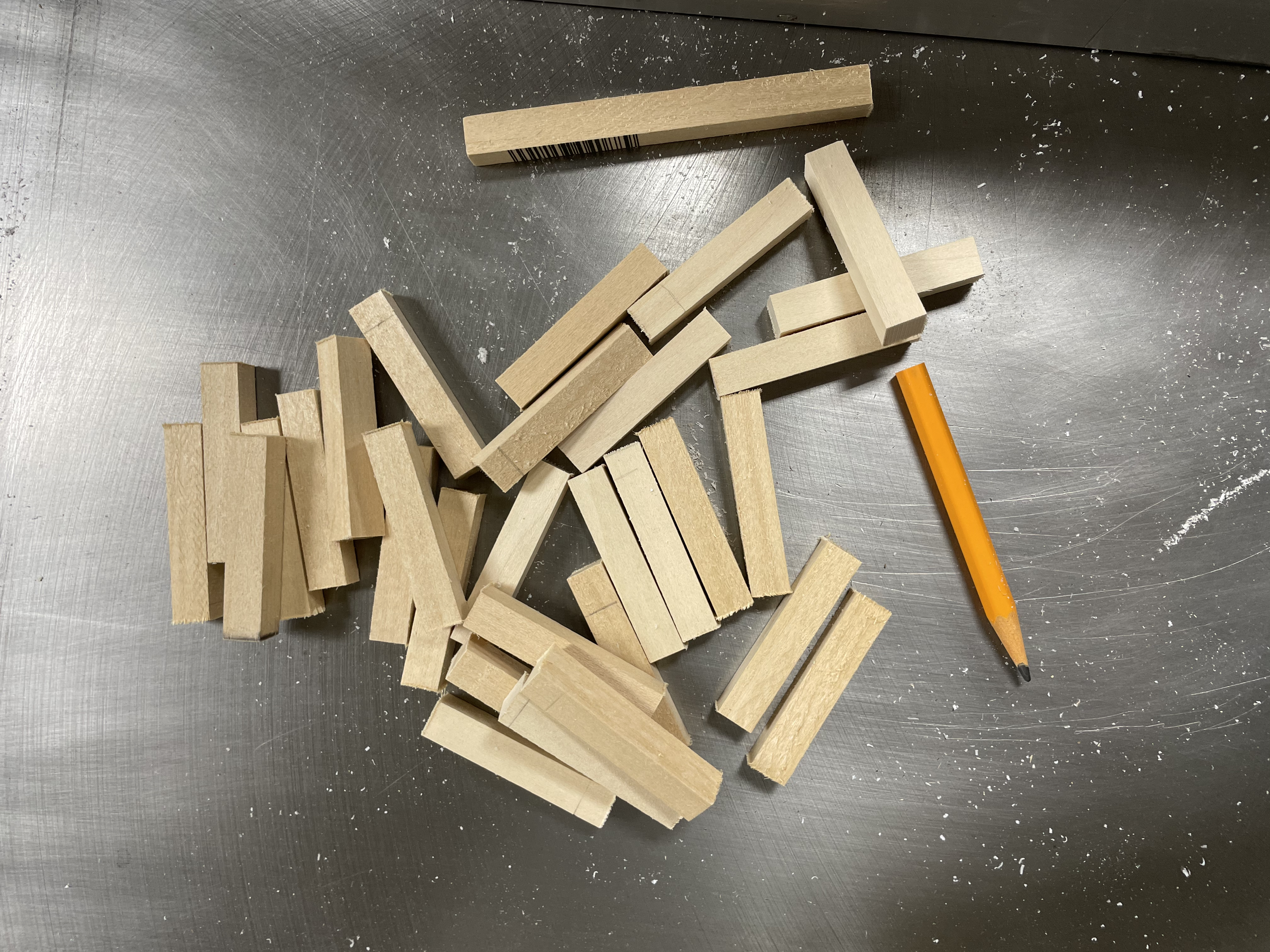
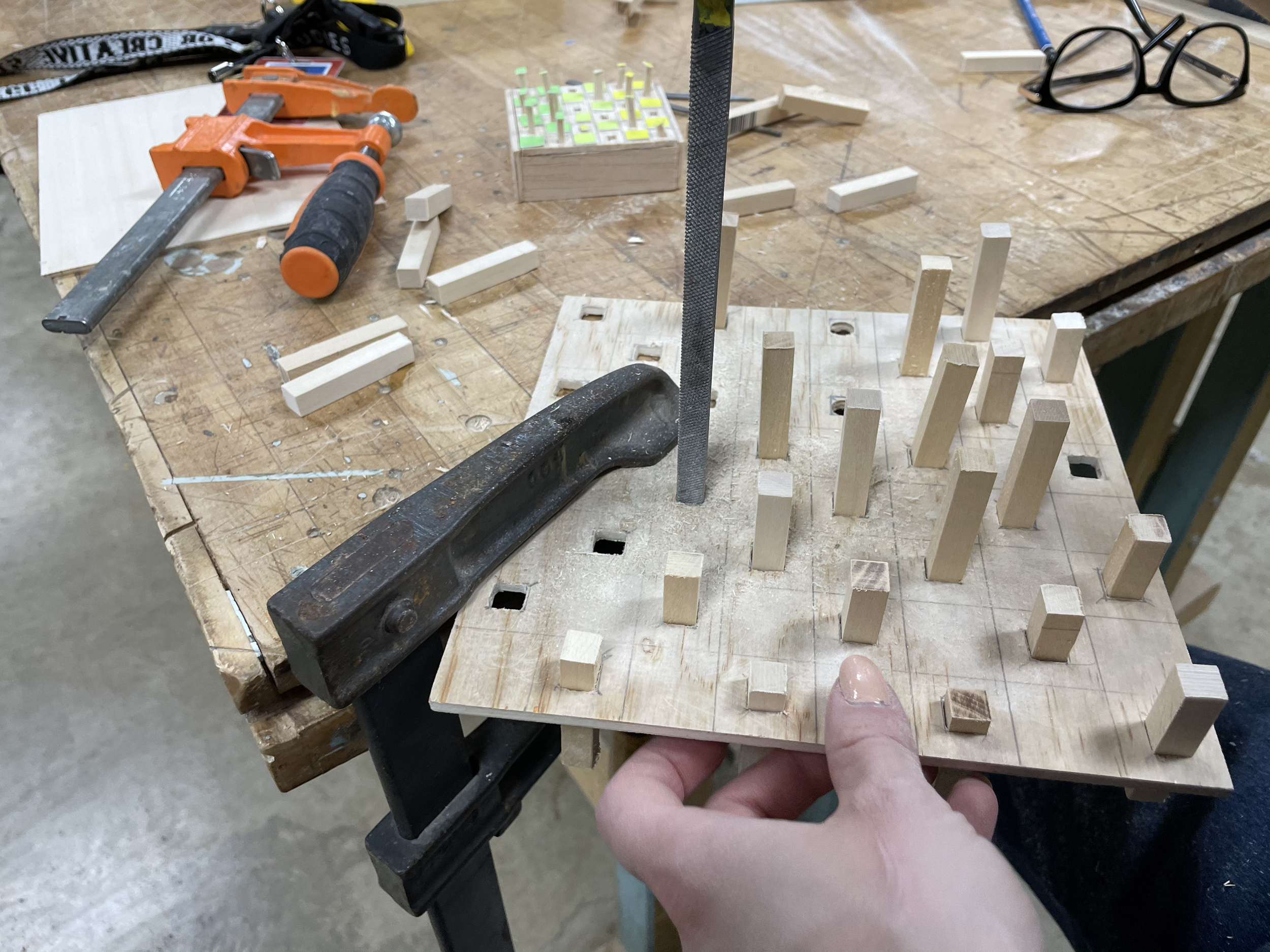
The board game making and prototyping process was labor-intensive and required a great deal of precision. Interestingly, the colors in the prototype were more accurate than those in the final board. I initially used Color-Aid paper to develop the color story, but I ran out during the prototyping phase and had to substitute a similar—though not exact—darker green for the final version. The design involved very detailed, small shapes, which added to the complexity of production. While the peg elevation feature was playful and engaging, if I were to redesign the board game, I would opt for a white lacquer base and simplify the moving pieces to square shapes. This would allow the focus to remain on the element of color rather than the intricacy of form.